
YES! Hashtags can be written in a way that makes them more accessible, specifically for people who use assistive technologies (known as screen readers) to “consume” digital content, but also for the general public.
As an extreme example, try reading this hashtag: #themostabsurdandlonghashtagevermade
Now, can you image someone with a reading disability, dyslexia, neurodivergent, or blind doing the same exercise? In case you hit a hard stop at “blind”, yes, people who are blind can consume digital content with the help of equipment that can read text out loud. This type of equipment is called a screen reader.
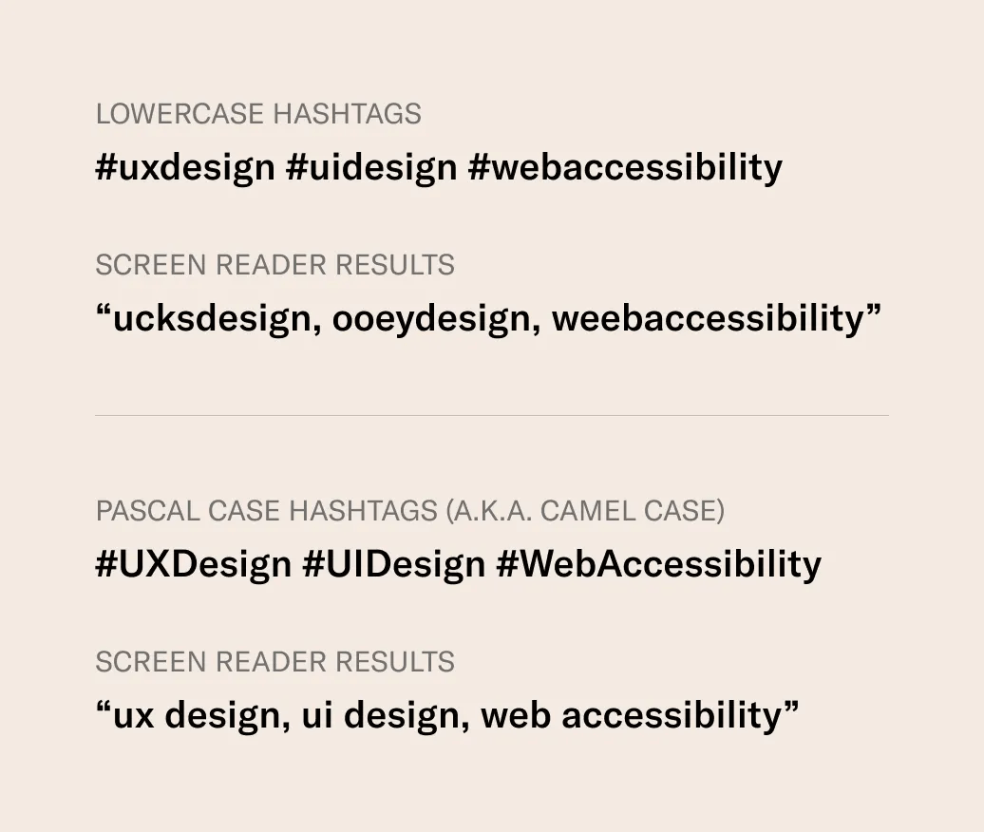
Going back to hashtags: if the example above was re-written like #TheMostAbsurdAndLongHashtagEverMade it would be much easier for screen readers to capture the individual words and read the message as intended. It’s also much easier for everyone else to read the words.
This simple change is called Pascal Case or Camel Case – capitalizing the first letter of each word in a hashtag. An easy step that allows more people to access and understand content.
In a nutshell:
There’s an excellent example by accessibility activist Mark Wyner that sums it up:
Expand your knowledge:
- Full article on accessible hashtags by Mark Wayne
- I highly recommend following Mark on social as well as exploring his blog posts
 NB Design Studio